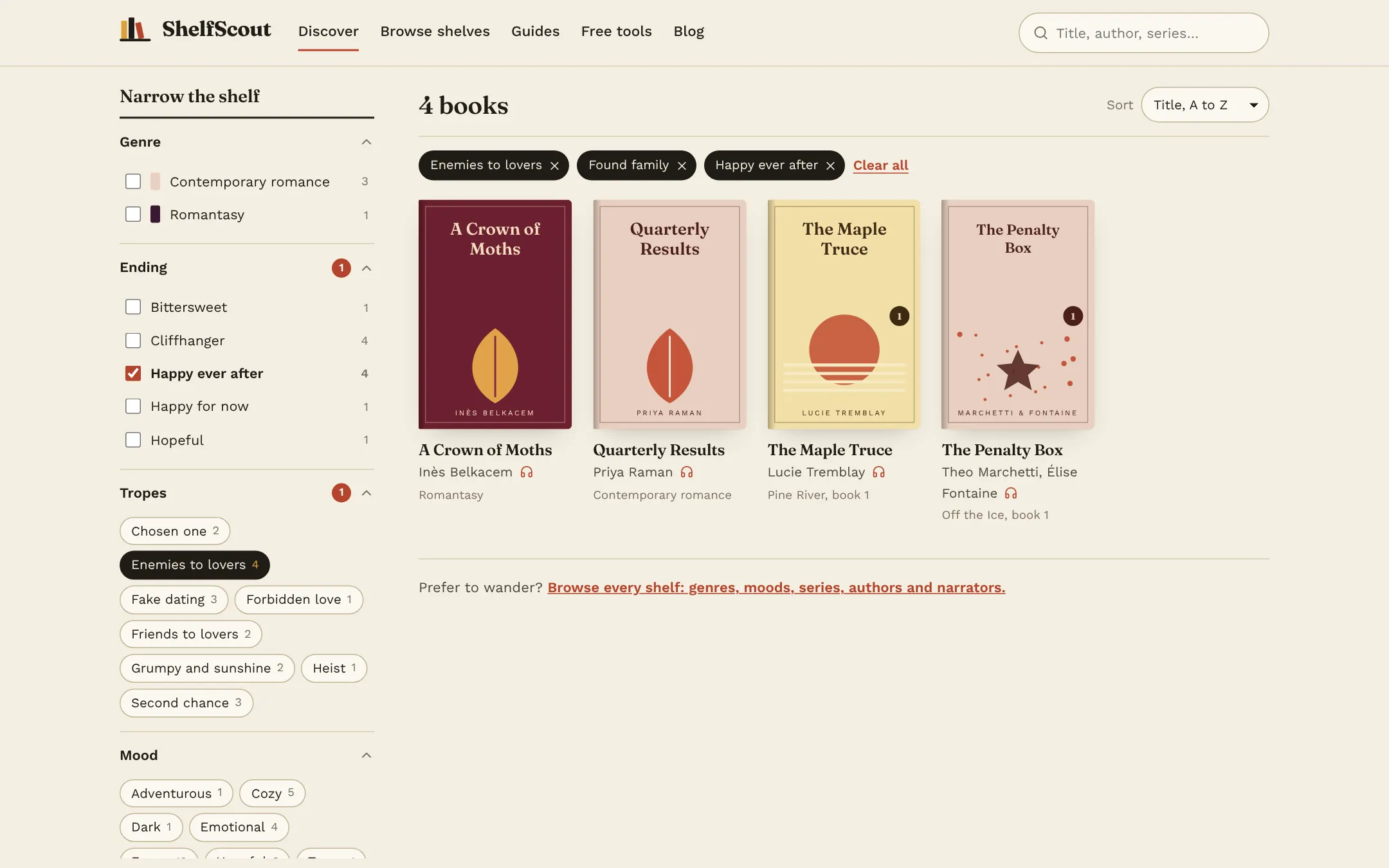
The filters a reader actually uses
- Genre. Contemporary romance, romantasy, fantasy, cozy mystery, thriller, science fiction, historical and literary fiction in the demo.
- Tags in six groups. Tropes, mood, setting, themes, pace and point of view.
- Ending. Happy ever after, happy for now, hopeful, bittersweet, cliffhanger or open.
- Central relationship. No romance, or the couple at the heart of the story.
- Reading order. Standalone, read in order, or can be read alone.
- Series, author and narrator. Each one a filter and a page.
- Audiobook, length and release date. Pages from and to, and "released since".
OR inside a group, AND across groups
Choosing two tropes shows books with either one. Adding a mood keeps only the books that also have that mood. That is how readers think, and it keeps a combined search from ending on an empty page too often.
Each option shows how many books it would leave, given everything already chosen. A reader can see that "cliffhanger" leaves two books before clicking it.
Chips, sort and an address for every view
Active choices sit above the results as chips that can be removed one by one, or all at once. Sort by title, newest, oldest, shortest or longest.
Every combination lives in the address bar, so a bookseller can send a reader "our cozy fantasy with a happy ending" as a link, and a blog post can point to the exact shelf it talks about.
On a phone
The filter rail becomes a sheet that slides up from the bottom, with the same groups and counts, and a button that says how many books it will show.