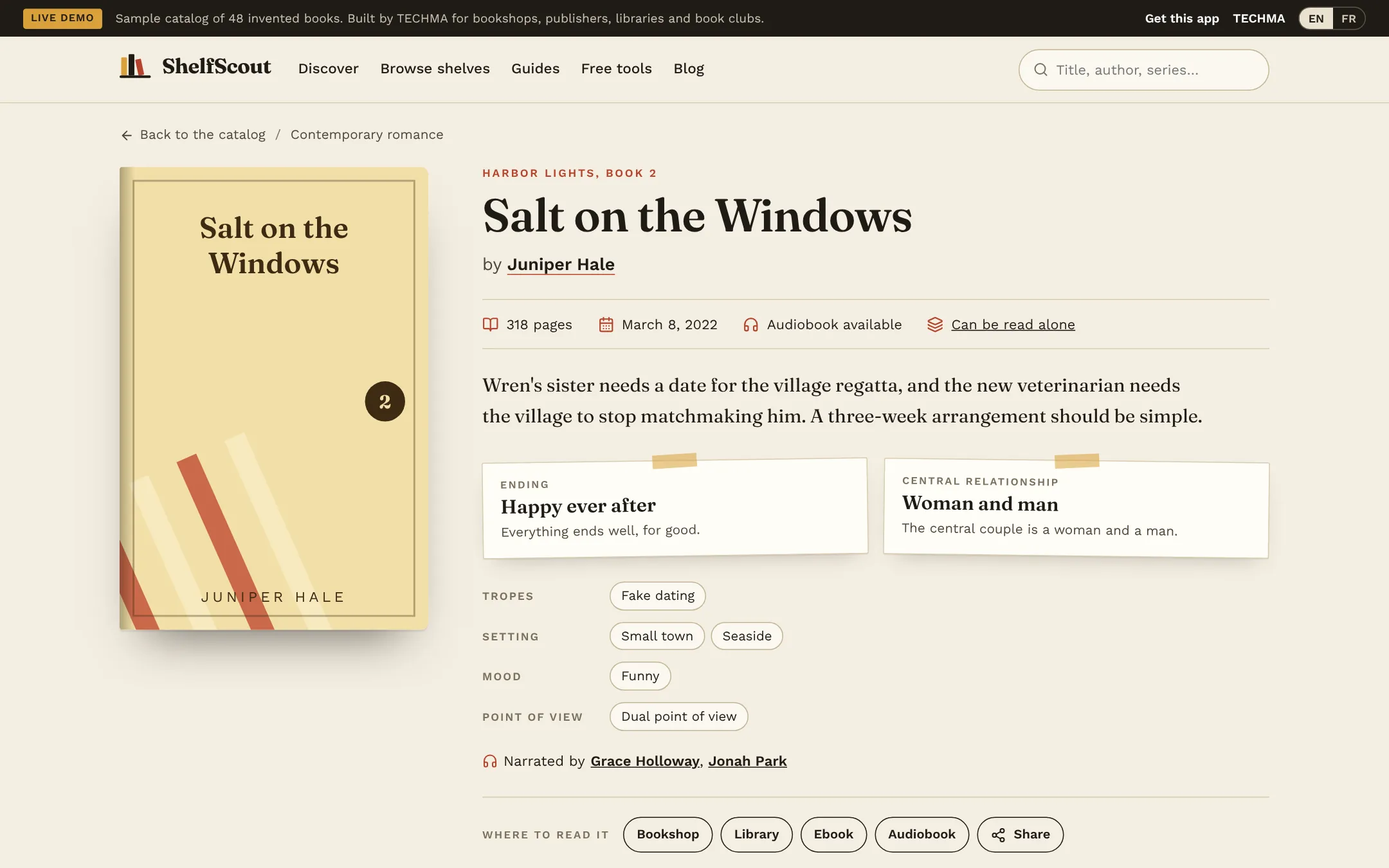
What the first screen says
- The series and the number, linked to the series page.
- The author, linked to their page, and the genre.
- A facts strip: pages, release date, reading order and audiobook.
- The blurb, in the reader's language.
Shelf-talker notes
Two short notes, like the cards booksellers clip to a shelf: how the book ends and who the central relationship is between. These are the two questions readers ask most, and the two that a back cover rarely answers.
Tags grouped the way readers think
Tropes, mood, setting, themes, pace and point of view each have their own line. Every tag is a link to its own shelf, so a reader who loved one found-family story is one click away from the others.
Where to read it
Buttons to your shop, a library, an audiobook store or a retailer, chosen by you. In the demo, the books are invented, so the buttons explain that instead of leading somewhere.
Search engines see it too
Each book has its own address and title, so a search for the book's name or its tropes can land on your page rather than on a marketplace.